
Every animal that goes into a food chain needs a backstory that holds up. Where it was taken, by whom, on whose land, and whether that land was clear of toxins. Until now, that story has lived on paper sheets, stapled together and passed from ute to chiller door.
You can still use the paper. We've just given it a memory.
Tags and dockets
- Big animals — deer, goats, pigs — each get their own tag with a QR code. Scan it at the kill and it's linked to the location, the hunter and the property.
- Small animals — rabbits, hares, possums — go in a box, and the box gets a docket. One docket, one hunt, every animal in it counted.
The paperwork writes itself
When you're ready to hand over, the app builds the supplier declaration from what you've already logged and what you're handing over. Which form you get depends on your credentials, not on a guess:
- Listed hunters supplying for human food get the human-consumption declaration (clause F2.7).
- Processor-approved hunters supplying for pet food get the petfood declaration (clause F2.8).
Both are laid out the way MPI's own forms are, so they look familiar to anyone who checks them. Instead of a pile of attachments, each declaration lists your hunt sessions and carries a map of where you hunted. The landholder's Poison Use Statement sits alongside it.
The handover
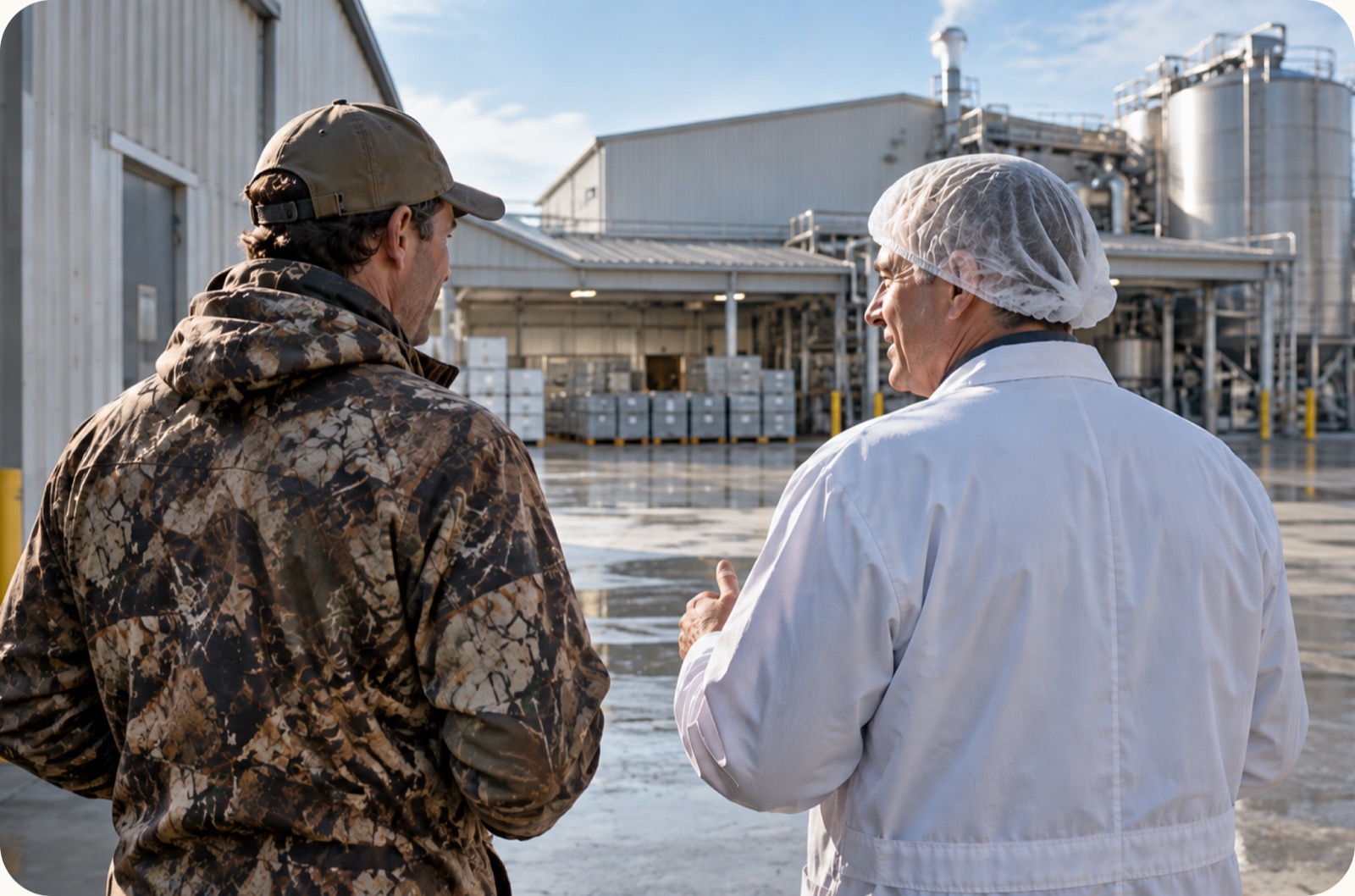
At the processor's door, the QR code is the handover. One scan and they can see the whole story behind that carcass or box: the land, the hunt, the toxin checks and the cold chain. The tag is matched against what arrives on the scales, and that's the record both sides work from.
No retyping. No lost sheets in the footwell. If MPI asks, the answer is in your profile or with the Processor.
Next up: what the processor sees on their side.